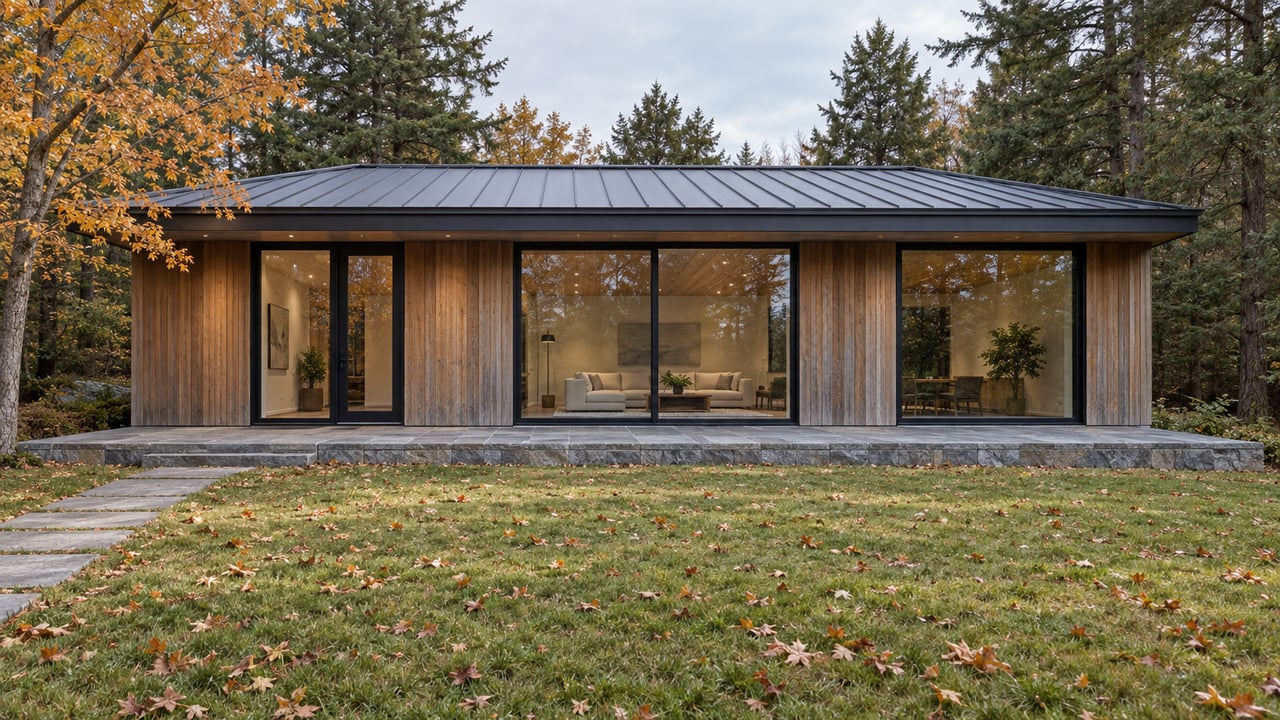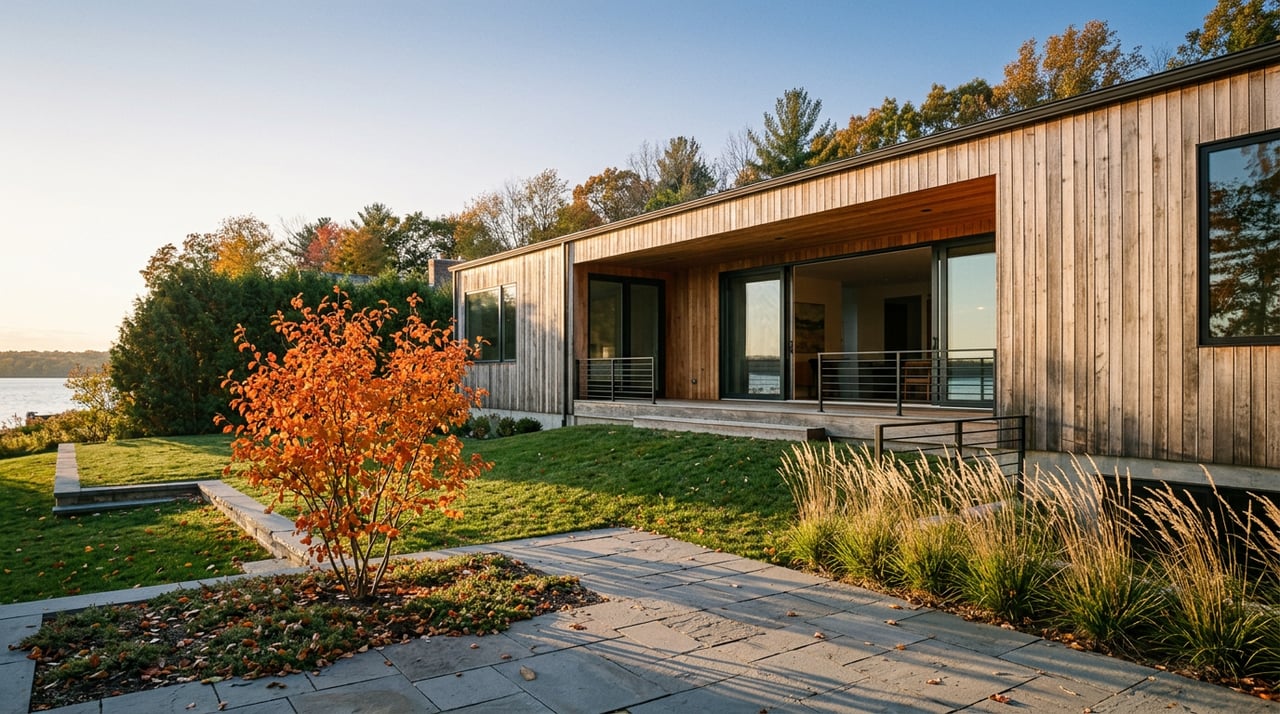
Two parcels can sit three miles apart on the same peninsula, wear the same "breathtaking bay views" language in their listing descriptions, and land nowhere close to each other on a per-acre basis. One might be 80 rolling acres with a century-old farmhouse. The other might be two wooded acres with nothing on it. The acreage tells you almost nothing. The number that actually sets the price rarely shows up until the third or fourth line of the listing, when it mentions whether the land's development rights were sold off years ago or never touched at all.
On Old Mission Peninsula, that single fact, whether a parcel sits inside Peninsula Township's Purchase of Development Rights program, does more to shape value than acreage, road frontage, or even bay exposure. Out-of-region buyers who shop the peninsula the way they'd shop anywhere else, by scanning acreage and price per square foot, miss it constantly. Here's what it actually means, what's happening with the program right now, and why getting it wrong on this particular stretch of Grand Traverse Bay is more expensive than it would be almost anywhere else.
What the PDR Program Actually Does
Peninsula Township's PDR ordinance has been active since 1994, one of the earliest programs of its kind in Michigan. The mechanics are straightforward on paper. A farmer or landowner applies to sell the development rights on their property to the township. An appraiser calculates the land's value two ways, once as a farm with full development potential and once as a farm permanently restricted from residential subdivision. The township pays the landowner the difference between those two numbers in exchange for a permanent, recorded easement.
According to Old Mission, participation is voluntary, and the restriction is not. Once a parcel is enrolled, it stays enrolled. The township's own PDR ordinance spells out this two-sided "before and after" appraisal process directly, which is worth reading if you're evaluating land seriously, because it shows exactly how the payment gets calculated and what gets extinguished in return.
That gap between "before" and "after" value is, in effect, the market's own estimate of how much of a parcel's price tag was ever about development potential in the first place. Buyers who understand that gap read listings differently.
How This Shows Up in Real Listings Right Now
Scan current Old Mission Peninsula land listings and the pattern repeats. A 46.5-acre farm with an 1885 farmhouse is marketed explicitly as protected farmland under the township's PDR program. An 80-acre parcel with a fully renovated 1900 farmhouse and a large red barn carries the same disclosure. A 53.4-acre listing does too. Agents lead with it because it is the whole pitch: this acreage, at this price, comes with a permanent ceiling on what it can become.
Set those next to a listing for a "Turnkey Farm Estate" of just over 23 acres, marketed pointedly as not part of the PDR program, with income and development potential called out by name. Or a 56.3-acre cherry farm advertised with the specific line that no development rights or governmental easements have been sold, meaning the buyer keeps every option on the table. Same peninsula, same soil quality, same distance to Center Road, completely different value proposition.
| PDR-Restricted Land | Full Development Rights | |
|---|---|---|
| Subdivision | Permanently restricted | Subject to normal township zoning and Agricultural Preservation Area rules, but not pre-restricted |
| Commercial ag use (tasting room, retail, events) | Depends on current township ordinance, which has changed more than once | Depends on current township ordinance, which has changed more than once |
| Price logic | Reflects the "after" appraisal value, development value already paid out | Reflects full market value, including unexercised development potential |
| Resale pool | Buyers seeking a working farm, estate, or vineyard lifestyle rather than a build site | Broader pool, including buyers weighing future subdivision or expansion |
The commercial-use row matters more than it looks, and it's where a lot of buyers get surprised after closing.
Why a Signed Easement Isn't the End of the Story
In a 2025 account published by Old Mission, one Old Mission grape grower described a purchase made specifically because township staff had indicated a winery, tasting room, and retail sales would be permitted on the farm in question. The grower sold development rights into the PDR program on that understanding and invested heavily in planting. Then Ordinance Amendment 201 changed the rules governing what agricultural properties could do commercially, and according to the grower's account, the township's own planner confirmed the earlier PDR arrangement no longer guaranteed the winery use that had been the basis for the original decision. The grower says two prospective sales of the farm fell through afterward, because buyers wanted the winery rights that were no longer assured.
Whatever side of that dispute you land on, the transaction lesson holds regardless: a PDR easement freezes subdivision rights, but it does not freeze the township's ordinance. Commercial agricultural use, especially anything involving tasting rooms, retail, or events, is governed by whatever zoning language is in effect at the time you want to use it, not necessarily what was in effect when the easement was signed. Amendment 128abc and Amendment 201 have both moved that line in the past decade. Buyers planning any commercial agricultural use on PDR land need to check current ordinance language against their plans, not assume the easement covers it.
What's Moving on the Peninsula Right Now
This isn't settled history. As Old Mission reported in late May 2026, the PDR Selection Committee is actively working through Round 1 and Round 2 applications, with the Warren Farm having just received its easement appraisal and several other named farms, including properties known locally as the S. Kroupa farm, Shea farm, Vogel farm, and Hawthorne farm, listed as active in the pipeline. Any of these could become PDR-restricted parcels in the near term, changing what future buyers of that land or adjacent land can expect.
At the same time, the broader dispute over agricultural zoning on the peninsula remains unresolved. According to Old Mission, Wineries of Old Mission Peninsula sued the township over restrictions on commercial expansion, won a lower-court judgment that included a damages figure of $49.2 million, and the township filed a 100-page appeal on February 13, 2026, arguing the award was untethered from the actual causes of any losses. That appeal is now working through the Sixth Circuit Court of Appeals. Until it resolves, the exact boundary of what agricultural and PDR-restricted land can be used for commercially remains an open legal question, not a fixed rule.
For a buyer evaluating vineyard or ag-zoned acreage today, that means the due diligence isn't just "is this parcel under PDR." It's "what does the township currently allow on PDR land, and is that likely to move again before I'm ready to use the property the way I'm picturing it."
Why the Stakes Are Higher Here Than Elsewhere
Old Mission Peninsula is not a market where mistakes correct themselves quickly. The peninsula-wide median sale price has run around $815,000 across late 2025 and into 2026, several times the statewide median, and inventory stays thin, often fewer than 100 active listings across the entire 18-mile stretch. Waterfront values in the broader Northern Michigan region have climbed sharply since 2020. Homes and land here typically take close to two months to sell rather than a matter of weeks.
Thin inventory and slow turnover mean a buyer who misreads a PDR restriction, or assumes commercial rights that the current ordinance doesn't actually support, can end up holding a property that doesn't do what they expected, with limited comparable buyers waiting in line behind them if they need to sell. On a peninsula this scarce, getting the easement question right before closing is worth far more than it would be in a market with faster turnover and deeper buyer pools.
A Short Due-Diligence Checklist
- Ask directly whether development rights have been sold, and to which entity, whether that's Peninsula Township's PDR program, a land trust holding a conservation easement, or an NRCS-backed agreement, since the terms differ.
- Request the actual recorded easement document, not just the listing description, so you can check the terms that apply to the property.
- If any commercial agricultural use matters to your plans, check that use against the township's current agricultural ordinance rather than assuming the PDR contract settles it.
- Ask when the underlying "before and after" appraisal was conducted, since land values on the peninsula have moved substantially since many existing easements were signed.
A Few Questions Worth Asking Directly
What should I check before assuming I can live on a PDR-restricted property? Read the recorded document, not the listing summary.
What about retail sales, tasting rooms, and event space on PDR-encumbered land? Those uses depend on the township's current agricultural ordinance, which has changed more than once and remains under active litigation.
Does buying land with full development rights guarantee I can build what I want? No. It means development rights were never sold to the township, but any construction still has to clear Peninsula Township zoning, setbacks, and Agricultural Preservation Area requirements regardless of PDR status.
Land on Old Mission Peninsula rewards buyers who read past the acreage number. If you're weighing a vineyard estate, a working farm, or a building lot on the peninsula and want someone who can walk the easement history and current ordinance language with you before you write an offer, Lydia Wiley works this market from both sides, resale and development, and can schedule a private consultation to go through it property by property.
This article is general information, not legal, tax or financial advice. Consult a qualified professional about your situation.