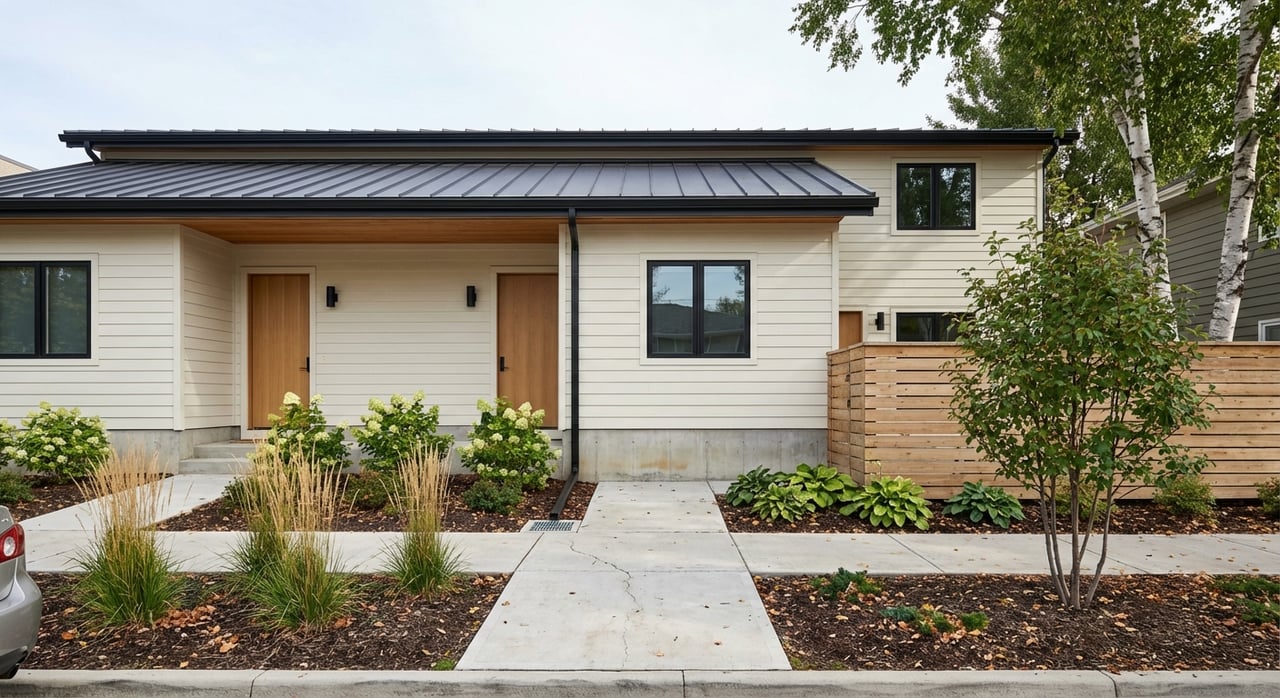
Thinking about house hacking a duplex or adding a small multifamily to your portfolio in Traverse City? You’re not alone. Between year-round hospital employment, a vibrant downtown, and strong summer travel, well-located 2–4 unit properties can rent quickly when they’re priced and presented well. In this guide, you’ll learn where these properties show up, what drives demand, how to underwrite a deal with confidence, and what to know about financing, taxes, and short-term rental rules. Let’s dive in.
Why small multifamily works here
Traverse City blends resort-town energy with steady local employment. Seasonal visitors boost summer demand, while hospitals and service industries help stabilize the off-season. That mix supports both long-term leases and, where allowed, licensed short-term stays.
Demand drivers to watch
- Tourism and events. The city’s official visitor site lists a packed calendar of festivals and happenings that spike summer lodging needs, from the National Cherry Festival to wine and endurance events. Explore the Traverse City events calendar.
- Outdoor draw. Sleeping Bear Dunes National Lakeshore attracts well over a million visits annually, reinforcing regional demand for short stays and influencing nearby rents and supply. See a visitation summary in this national parks data roundup.
- Short-term rental footprint. Market snapshots show a sizable inventory of vacation rentals with high summer rates, which can tighten long-term supply. Review a local overview in this Traverse City short-term rental snapshot.
- Year-round employers. Health care is a key anchor. Munson Healthcare, the regional system, supports ongoing renter demand among medical staff and allied services. Learn more about Munson Healthcare’s regional presence.
Rents, seasonality, and vacancy
- Asking rents in the city have trended in the high $1,700s to $2,300 range in recent years depending on month and unit mix. Expect higher premiums for renovated, walkable units.
- The county’s multi-year median gross rent is lower than city asking rents, which highlights the city–county spread. Grand Traverse County’s recent median gross rent was $1,288. See the U.S. Census QuickFacts for Grand Traverse County.
- Underwrite a blended vacancy of 5–10 percent for year-round units. If your plan depends on licensed short-term rentals, build in higher turnover and management costs alongside strong summer rates.
Where 2–4 unit properties show up
Classic conversions
You’ll often see older single-family homes converted to duplexes or triplexes, plus bungalows with an accessory unit. These can offer charm and walkability, but they require close attention to separate systems, egress, and life-safety.
Purpose-built small buildings
Smaller apartment blocks or condo-conversion buildings near downtown appear less often, but when they do, they usually command strong interest due to location efficiency and simpler layouts.
Neighborhood patterns
- Downtown and Slab Town. High walkability and strong interest in smaller, updated units. Premium rents reflect proximity to dining, trails, and the bay.
- Near Munson Medical Center. Consistent demand from health care workers and professionals keeps occupancy stable.
- Edge neighborhoods and nearby townships. You’ll find more single-family stock and potential price relief, with a tradeoff of longer commutes and different zoning rules. Confirm permitted uses and density with the relevant jurisdiction.
How to evaluate a deal
A simple, disciplined underwriting framework lets you compare options quickly and avoid surprises.
Key metrics in plain English
- Gross scheduled rent (GSR). Total monthly rent for all units multiplied by 12.
- Vacancy and credit loss. The rent you won’t collect due to turnover or nonpayment.
- Effective gross income (EGI). GSR minus vacancy.
- Operating expenses. Taxes, insurance, utilities you pay, repairs, maintenance, management, reserves.
- Net operating income (NOI). EGI minus operating expenses. This is your income before the mortgage.
- Cap rate. NOI divided by purchase price. A quick way to compare deals.
- Gross rent multiplier (GRM). Purchase price divided by GSR. A fast screening tool.
- Cash-on-cash return. Annual cash flow after the mortgage divided by your cash invested.
Sample numbers for a Traverse City duplex
Below is an illustrative example using local-style rents and conservative assumptions. Always verify taxes, insurance, and rent with current comps.
- Purchase price: $425,000
- Units: 2
- Market rent per unit: $2,100 monthly
- GSR: $2,100 x 2 x 12 = $50,400
- Vacancy: 7 percent = $3,528
- EGI: $50,400 − $3,528 = $46,872
- Operating expenses (illustrative):
- Property taxes: $6,300
- Insurance: $1,700
- Water, sewer, trash: $1,800
- Maintenance and reserves: 8 percent of GSR = $4,032
- Management: 8 percent of EGI = $3,750
- Repairs and misc: $2,200
- Total operating expenses: $19,782
- NOI: $46,872 − $19,782 = $27,090
- Cap rate: $27,090 ÷ $425,000 = 6.37 percent
Financing examples:
- Investor conventional, 25 percent down. Down payment $106,250; loan $318,750. If the annual debt service is about $25,400, then cash flow is roughly $1,700 per year and cash-on-cash is about 1.6 percent.
- Owner-occupant house hack. If you live in one unit and rent the other, your tenant’s payment can offset a meaningful share of your monthly cost. Exact results depend on your loan rate, taxes after transfer, and how you allocate expenses. Run both versions side by side.
Sensitivity test the pro forma
- Conservative: Drop rent 5 percent, increase vacancy to 10 percent, and add 2 percent to expenses. Do you still break even after debt?
- Baseline: Use today’s comps and 5–7 percent vacancy for long-term leases.
- Optimistic: Use top-of-market rents only if condition and location warrant it. Never plan on short-term rental income without a current license and confirmed zoning.
Financing your 2–4 unit purchase
FHA for owner-occupants
FHA has long allowed eligible buyers to purchase 2–4 unit properties when they live in one unit, historically with a minimum 3.5 percent down payment. Program specifics and lender overlays change, so confirm details with a mortgage professional. See an overview of typical FHA practice in this summary of multi-unit down payment options.
Conventional options and recent updates
Since late 2023, industry summaries note that some agency guidelines expanded certain owner-occupant 2–4 unit options and adjusted maximum loan-to-value rules. Availability varies by lender and automated underwriting. Review a plain-English brief on Fannie Mae 2–4 unit guideline updates, then confirm specifics directly with your lender.
Taxes, zoning, and short-term rentals
Michigan property tax uncapping
Michigan’s taxable value typically resets upon transfer, which can push a buyer’s tax bill above the seller’s historic figure. Model post-sale taxes rather than reusing last year’s bill. This Michigan property tax explainer outlines the concept. Your local township treasurer and assessor post millage rates and payment schedules. Use the Garfield Township resources page as a reference point for where to look.
Zoning and licensing vary by jurisdiction
Traverse City and adjacent townships follow different zoning codes and licensing approaches for long-term and short-term rentals. Always confirm the parcel’s zoning district, permitted uses, spacing rules, and required inspections with the city or township. Local reporting tracks ongoing debates about short-term rental policy shifts, so rules can evolve. For context, see a recent TraverseTicker update on potential STR changes.
Due diligence checklist
Use this quick list to validate a small multifamily before you write an offer.
Confirm zoning and permitted use with the city or township. Check whether duplex or triplex is permitted by right or needs a special review. Start with your jurisdiction’s resources, like the Garfield Township departments page.
Pull the current tax bill and parcel record. Model post-sale taxable-value uncapping using local millage rates.
Verify rental licensing or short-term rental rules and any registration, spacing, or occupancy limits. See local coverage of ongoing updates in this TraverseTicker article.
Inspect the building systems. Roofing, foundation, drainage, electrical, plumbing, HVAC, separate meters, fire egress, and lead-paint risk in pre-1978 homes.
Review all leases and ledgers. Look at term, deposit amounts, payment history, and whether rents are at, above, or below market.
Map utilities and operating details. Clarify who pays for what, parking availability, and laundry revenue potential.
Get insurance and management quotes. Compare long-term management percentages with per-booking fees for licensed STRs.
Secure financing pre-approval. Ask whether projected rental income can be used to qualify and what reserves are required.
Plan your tax strategy. Residential rental buildings are generally depreciated over 27.5 years on federal returns. Talk with a CPA about timing, recapture, and your status.
Owner-occupant and investor tips
- If you plan to live in one unit, target layouts that deliver privacy between units, separate entrances, and easy-to-manage exterior maintenance.
- For long-term rentals, professional photos, clean finishes, and pet policies aligned with local norms can reduce vacancy. Strong summer inquiry volume often offsets slower winter leasing.
- If you are considering short-term rentals, verify licensing first. Then budget for furniture, higher cleaning and turnover costs, and more active management.
- Keep a rolling 6–12 month comp file for both rents and sales. Traverse City pricing moves block by block, so hyperlocal data matters.
Work with a local advisor
Small multifamily success here comes down to placement, product, and precision. You want the right address, a building that’s easy to manage, and clean numbers that hold up through the winter. If you’d like help sourcing on or off-market opportunities, verifying parcel-level rules, or running a tailored pro forma, schedule a private consult with Lydia Wiley. You’ll get boutique, high-touch guidance paired with development-level insight and marketing reach.
FAQs
What counts as a small multifamily in Traverse City?
- In this guide, small multifamily refers to 2–4 unit properties like duplexes, triplexes, and fourplexes, which are financed more like residential homes than large apartments.
Are short-term rentals allowed in the city of Traverse City?
- Rules vary by jurisdiction, zoning district, and license type, and they can change. Confirm the parcel’s zoning and STR licensing with the city or township and review local updates like this TraverseTicker coverage.
What are typical rents for 2–3 bedroom units in the city?
- Recent asking-rent snapshots show many city listings in the high $1,700s to $2,300 range, with higher premiums for updated, walkable units. The county’s multi-year median gross rent is lower at $1,288 per the U.S. Census QuickFacts.
What financing options exist for 2–4 unit purchases?
- Owner-occupants often use FHA with historically low down payment minimums for eligible borrowers, while conventional agency products may have updated guidelines for 2–4 units. See FHA context here and conventional updates here, then confirm details with your lender.
How will Michigan property tax uncapping affect my numbers?
- After a sale, taxable value typically resets, so your tax bill may rise compared to the seller’s. Model post-transfer taxes using local millage rates and the treasurer’s data. For background, review this Michigan property tax overview.
Which Traverse City areas are best for rental demand?
- Proximity to downtown and major employers often supports strong demand. Downtown and Slab Town command premiums for walkability, and areas near Munson Medical Center attract year-round renters. Always verify with recent neighborhood-level comps.