Is your Suttons Bay shoreline worth what buyers will pay this season, or are you leaving money on the table? Pricing a waterfront home is different from pricing an inland property, and small details along the water can change value in big ways. If you are selling or buying on Grand Traverse Bay, Lake Leelanau, or one of Suttons Bay’s smaller inland lakes, you need a plan grounded in local nuance, not rules of thumb. In this guide, you will learn the factors that truly move price, how pros structure comps, and practical steps to list or offer with confidence. Let’s dive in.
Why Suttons Bay waterfront is different
Suttons Bay sits at the head of Grand Traverse Bay, with a mix of open-bay frontage, harbors, and nearby inland lakes. Each shoreline behaves like a micro-market. Grand Traverse Bay’s deep water and panoramic views often command premiums compared with smaller inland ponds or rivers.
Seasonality matters. Listing activity and showings typically peak from late spring through summer. Off-season comps can understate warm-weather demand, so you should read winter sales with caution.
Waterfront inventory is limited and varied. Lots can differ in frontage length, water depth, shoreline type, and topography. Because of that, simple price-per-square-foot measures are rarely reliable. Valuation leans on specialized waterfront comps and, for unique properties, experienced appraisals.
Key factors that drive value
Waterbody type and setting
Not all water is equal in the market. Grand Traverse Bay frontage typically carries higher value than small inland waterbodies because of deeper navigation, broader views, and boating access. Exposure to wind and wave energy can raise or lower desirability depending on your buyer’s priorities.
Frontage length and beach quality
Feet of shoreline matter, but the premium is not linear. Usable width, beach shape, and how the shoreline actually functions for your lifestyle matter more than raw frontage. Sandy, gradual entries tend to outperform steep, cobble, or rock shorelines in pricing.
Water depth, docking, and access
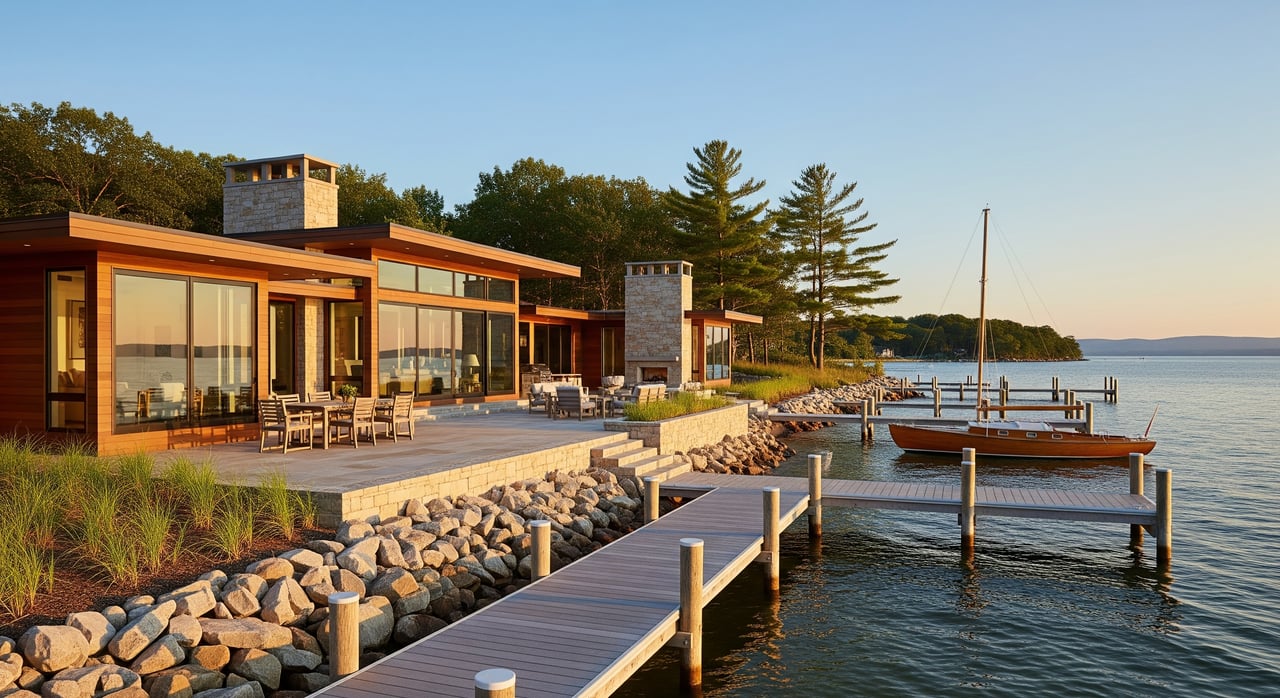
Deep-water frontage that allows reliable docking and launching is a major value driver. An existing permitted dock, mooring, slip, or boathouse adds utility. Shallow or seasonal access can limit boating and reduce price compared with similar homes with year-round docking.
View quality and orientation
Panoramic and south-facing views often command premiums. Limited or obstructed views can drag on value even when the house itself is updated.
Lot topography and buildability
Flat or gently sloped lots with room for garages or expansions tend to price higher than steep, cliff-like sites. Local setbacks and shoreland rules also affect how usable the land is.
Condition and improvements
Updated systems, well-maintained structures, and permitted shoreline improvements signal lower future costs. Deferred maintenance on seawalls, docks, roofs, or septic systems will show up in buyer feedback and appraisal adjustments.
Risk, infrastructure, and environmental checks
Erosion and water levels
Great Lakes water levels fluctuate. Higher levels and storms can increase erosion risk. Shore protection like riprap or seawalls can help, but they require upkeep and permits. Buyers and sellers should understand shoreline condition and any recent repairs.
Flood zones and insurance
If a home is in a mapped flood zone, lenders may require flood insurance and an elevation certificate. Premiums and availability can affect affordability and marketability.
Septic and well systems
Many Suttons Bay area waterfront homes rely on private wells and septic systems. Age, capacity, setback from the water, and county health approvals directly influence value. Plan for inspections and factor any replacement costs into pricing.
Access and utilities
Road type and maintenance, snow removal, and whether you have municipal services or private systems shape both day-to-day utility and long-term cost to own.
Legal and regulatory realities
Ordinary High-Water Mark and public trust
On Michigan’s Great Lakes, land below the Ordinary High-Water Mark is commonly held in public trust. Your survey should show where the OHWM lies relative to structures and the shoreline.
Docks, seawalls, and shoreline work
Docks, piers, and seawalls often require permits. Permitted and properly maintained structures add confidence and value. Unpermitted work can become a negotiation issue or require corrective action.
Zoning, setbacks, and shoreland protection
Village and township rules govern setbacks, lot coverage, and accessory structures near the water. If you plan to expand, verify what is allowed before pricing your home as a renovation candidate.
Short-term rentals and income
Local ordinances and any required licenses can affect rental potential and value. If you will market the home as an income property, keep accurate rental records and confirm compliance.
How professionals value waterfront homes
Sales comparison approach
This is the primary method. Start with recent closed sales on the same waterbody, then adjust for frontage, water depth and dockability, view, lot buildability, condition, and any permitted shoreline improvements. Expect larger adjustments than you would see for non-waterfront comps.
Income approach
If the property has reliable rental history, you can value it using net operating income and market cap rates for similar seasonal rentals. Seasonality and local rules affect both the income and the cap rate, so use documented data.
Cost approach
Most useful for new or very unique builds. Estimate replacement cost minus depreciation, then add land value. Because many waterfront homes are one of a kind, this is often a secondary check, not the lead method.
Seller playbook: set a price with confidence
Gather documents. Have a current survey showing the OHWM, permits for docks or shoreline work, any recorded easements, and recent well and septic reports. If you have rental records, assemble them.
Inspect before you list. Consider pre-listing inspections for septic, well, structure, and shoreline condition. A small upfront spend can protect your price by reducing buyer uncertainty.
Lean on local comps first. Use sales on your same shoreline or a closely similar waterbody. Avoid overreliance on price per square foot.
Consider a specialized appraisal. For unique properties, estate sales, or price-sensitive situations, hire an appraiser with Leelanau waterfront experience.
Choose a market-credible list price. Waterfront scarcity allows some premium, but overpricing can stall showings. Start near the strongest comps and be ready to adjust based on feedback within the first few weeks.
Highlight real value drivers. Emphasize frontage type and usability, deep-water docking, panoramic views, recent system upgrades, and all permitted shoreline improvements.
Buyer roadmap: write a strong, safe offer
- Order a current survey. Confirm the OHWM, property lines, and any encroachments.
- Verify dock and mooring rights. Confirm permits and transferability in writing.
- Review zoning and setbacks. Know your options for adding a garage, expanding a deck, or rebuilding.
- Check flood maps and insurance. Obtain an elevation certificate if needed and price premiums into your offer strategy.
- Inspect well and septic. Require testing and ensure the system meets county standards.
- Validate rental assumptions. If income matters, request documented rental history and confirm local rules.
- Work with a waterfront-savvy lender and appraiser. Some lenders have extra requirements for waterfront properties and private systems.
Pricing strategies for Suttons Bay’s seasonal market
- Aim for in-season exposure. Spring and summer bring the broadest buyer pool for waterfront. If you must list off-season, build flexibility into your pricing and timeline.
- Use staged pricing, not wishful pricing. Listing slightly above market to allow negotiation is reasonable. Pricing far outside the range reduces urgency and time on market can become a negative signal.
- Let showing data guide you. High traffic with low offers signals a mismatch. Limited showings may mean buyers do not see the value at your number or your marketing is missing key value drivers.
What to gather before you list
- Current survey with OHWM marked
- Title work and any recorded easements
- Dock, seawall, or shoreline permits and service records
- Septic inspection and maintenance history
- Well inspection and water quality report
- Property disclosures, including flooding or erosion history
- Rental income and expenses, if applicable
- Any recent appraisal or market analysis
Costs to own and operate on the water
- Insurance. Waterfront exposure and any flood risk can raise premiums.
- Shoreline maintenance. Seawalls, riprap, and docks require ongoing care and occasional replacement.
- Property taxes and assessments. Higher assessed values are common along the water.
- Utilities and access. Private road maintenance and private systems can add to annual budgets.
When to bring in specialists
- Appraiser with Leelanau waterfront experience for unique or high-value properties.
- Surveyor to locate the OHWM and confirm boundaries or encroachments.
- Title company familiar with littoral rights, shared beaches, and access easements.
- Shoreline professional to assess erosion and the condition of protection structures.
Partner with a local expert
Waterfront pricing in Suttons Bay is equal parts lifestyle and technical due diligence. When you combine a precise read on frontage, depth, view, and permits with high-caliber marketing, you unlock maximum value without guesswork. If you are planning to list or make an offer this season, let’s tailor a strategy to your shoreline and your goals.
Ready to move? Schedule a private consultation with Lydia Wiley to align pricing, marketing, and timing for your Suttons Bay waterfront.
FAQs
How do I value feet of frontage in Suttons Bay?
- There is no fixed per-foot rule. Usable width, beach quality, water depth, and lot utility drive premiums. Start with recent sales on the same waterbody and adjust from there.
Do I own the beach in front of my Grand Traverse Bay home?
- Ownership on Great Lakes shorelines typically extends to the Ordinary High-Water Mark. Land below the OHWM is commonly held in public trust. Confirm with a survey and title review.
Will my dock and mooring rights transfer to a buyer?
- It depends on title, recorded licenses, association rules, and permit history. Confirm transferability and permits in writing during due diligence.
Are waterfront homes harder to finance in Leelanau County?
- Not always. Lenders often require well and septic inspections and prefer appraisers with waterfront experience. Insurance and any flood risk can affect loan terms and affordability.
How do short-term rental rules influence price?
- Proven, compliant rental income can support a higher price using an income approach. Local ordinances, license requirements, and taxes shape both income and demand, so verify details early.
What pre-listing inspections should a waterfront seller complete?
- Prioritize septic, well, structural, and shoreline assessments, along with a survey focused on the OHWM. These reduce surprises and help defend your list price.